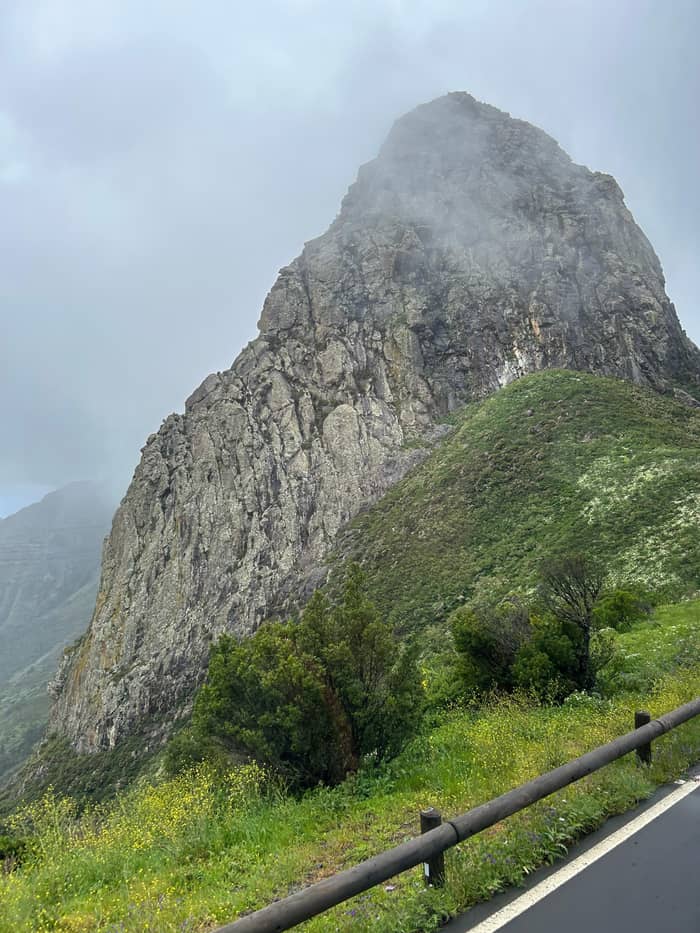
Taster
Day trip with lunch
The Silbo at the table
- Length9 hours
- DemonstrationWith lunch
- Pricefrom €113
Cost for your group
Choose from 3 options
Add the people in your group to see what each choice costs.
≈
View≈
View≈
ViewCurrency conversion uses the ECB reference rate on GetYourGuide from-prices. The exact price is displayed when you book.
How the Silbo Gomero works, where a day visitor hears it, what the island's history and food add to a visit and what the tourist board can help with, with a timeline and a table.
Editorial team, lagomeratour.click · Updated November 23, 2026 · 8 min reading time
Basics
Among all the La Gomera facts a visitor can carry home, the Silbo Gomero is the one that stands out. UNESCO inscribed this whistled language in 2009 on its Representative List of intangible heritage,1 and it describes the Silbo as the one whistled language worldwide that has been fully developed and is practised by a large community.6 A language carried by whistling sounds like a curiosity, until you stand in a valley and imagine what it did for a shepherd.
The island board stresses that the Silbo is a full language and not a preset code that expresses a limited set of messages.7 UNESCO says it passed from master to pupil across many centuries,8 and the board says the Silbo is taught in all the schools of La Gomera.9 It is therefore not a museum piece. Children learn it as a school subject, and the island treats it as a living part of daily identity.
For a day visitor the Silbo is a tangible thing to look for. The coach day sold on this site schedules lunch with a Silbo demonstration, and the small-group highlights tour on the island names the whistled language among its subjects. Ask the guide when the demonstration will happen and where it will take place, and keep the group quiet while the whistler works, since the sounds are soft and carry best in a hush.
What to look for
| Tradition | What it is | Where to meet it |
|---|---|---|
| Silbo Gomero | A whistled form of Castilian Spanish.14 | Lunch demonstration, Mirador de Igualero |
| Palm honey | Boiled palm sap with a caramel texture.20 | Shops and restaurants |
| Almogrote | Cured cheese and mojo picón, served with gofio.21,22 | Restaurant menus |
| Pottery | Made by hand without a wheel.23 | El Cercado |
| Baile del Tambor | An ancestral song and dance.24 | Village festivals |
| Columbus sites | A well, a church and a house museum.25,26,27 | San Sebastián |
Each row restates what the island board and UNESCO say; opening hours and festival dates change, so check them on the board's site.1
The principle is easy to state and hard to master. UNESCO says the Silbo turns the everyday speech of the islanders, Castilian Spanish, into whistles.14 It adds that two distinct whistles replace the five Spanish vowels and that four whistles stand for consonants.15 The island board counts the same system as 6 sounds, 2 vowels and 4 consonants, which is a very small alphabet for a whole language.16
What separates one sound from another is pitch and rhythm. UNESCO says the whistles are told apart by pitch and by whether they are interrupted or continuous.17 The board puts it in a similar way, saying that the tone and the continuity of the whistle distinguish each word.18 A skilled whistler therefore turns a sentence into a short melody, and a listener who knows the code hears words in it.
The technique is physical. The board notes that Silbo techniques use the lips, the tongue and the hands,19 and a whistle can carry up to 5 kilometres across the ravines.3 That reach explains the island's gift to the language: on a landscape of valleys, ravines and walls a shout is lost while a whistle travels. The visitor does not need to learn the code to enjoy it, since hearing a whistled sentence is enough.
The whistle in numbers
The island board reduces Castilian Spanish to 6 sounds for the Silbo, 2 vowels and 4 consonants.16
The board dates the origin of the Silbo to long before the arrival of the Spanish conquerors, created by the first inhabitants of La Gomera.10 From the 16th century it began to adapt to Castilian Spanish, according to the same source.11 The island's geography did the rest: the board says the whistle arose as a way for shepherds to communicate over long distances.3 Seen that way, the language is a response to terrain more than an art form.
Then came a crisis. The board says that in the middle of the 20th century the Silbo suffered a serious crisis of identity, and only some elders could use and understand it.12 The community reacted by opening centres to teach the whistle to the young in parent associations and after-school classes.13 Since 1999 the Silbo has been a compulsory subject in primary and secondary school,2 and a School of the Silbo Gomero trains students who want to become instructors.28
Recognition followed. The board adds that UNESCO named the Silbo an intangible heritage of humanity in 2009,29 and it adds that only those born before 1950 and those who have attended classes since 1999 can put it into practice.30 It also notes that the SETI Institute found the whistle of interest for studying animal languages or possible alien languages.31 A language once on the edge now draws attention from scientists as well as visitors.
Pick your angle
Say what interests you most and the best-fitting plan appears.
If I want to hear the whistle
Coach day trip
It lists a lunch with a Silbo demonstration.
If I want an hour among old tools and terraces
Ethnographic Park
The ticket listing names a watermill, banana terraces and palm syrup.
If I want a guide who explains
Small group
It starts on the island with an official guide.
If I want to see Columbus sites
San Sebastián
The island has a well, a church and a house museum there.25,26,27
If I want to taste the island
A restaurant stop
The board lists palm honey, almogrote and gofio.5
Pick a way in
Taster
The Silbo at the table
Museum
A museum outdoors
Guided
Villages and the whistle
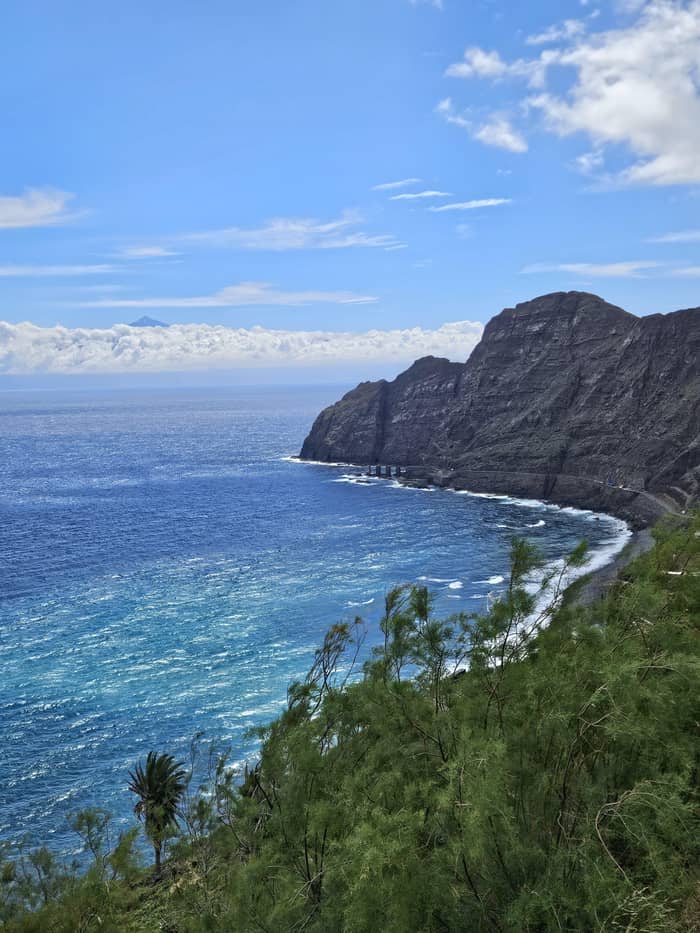
A coach day gives you a lunch with a demonstration, but there are other places to meet the Silbo if you have your own time on the island. According to the board, a monument to the whistled language stands at the Mirador de Igualero, which also gives another view of the Fortaleza rock.32 The viewpoint suits a traveller with a rental car who wants to read the monument and look at the rock without a group waiting, and a stop there takes little time.
Another stop is the Ethnographic Park, which has an entry-ticket listing from €4. The listing names the largest antiques collection on La Gomera, viewing points, a restaurant, a local products shop, banana terraces, palm syrup, a working watermill and the Gomeran whistle, and it offers an audio guide in Spanish, English, French, German and Russian. The board's own route notes list the Los Telares Ethnographic Park in Hermigua,35 so check which park you are booking.
A guided day with commentary is a further option. The day-trip listing has live guides in Spanish, English, French and German, and the on-island group tour has guides in Spanish, Italian and English. Language matters here, because a whistle is easier to appreciate when someone explains the vowels and the pitch while it is being performed. If the whole group follows the guide's language, the demonstration is a highlight rather than background noise.
The Silbo through time
Before the conquest
The island board dates the origin to long before the Spanish conquerors.10
The 16th century
The whistle began to follow Castilian Spanish.11
Mid 20th century
Only some elders could use and understand it.12
After the crisis
The community opened centres to teach the young.13
From 1999
It became compulsory in primary and secondary school.2
In 2009
UNESCO inscribed it on its Representative List.1
The island's earliest inhabitants are still debated. The board says the most accepted theory is that they were Berbers originating from Ghomara,36 and that the island was then divided into 4 cantons named Mulagua, Hipalán, Orone and Agana.37 It adds that people often say La Gomera was never conquered.38 The Archaeological Museum of San Sebastián keeps remains of those first inhabitants,39 and the site of Toscas del Guirre was used to mark the solstices.40
Columbus is the name most visitors know. The board says that in 1492 La Gomera was the last supply point before his caravels set sail into the unknown,41 and that San Sebastián had a natural bay of easy access where he docked and took on water and supplies.42 A university professor quoted by the board places his departure on the morning of Thursday 6 September 1492.4 The Pozo de la Aguada in San Sebastián supplied water on his 3 voyages.25
Other stories sit nearby. The church of the Assumption in San Sebastián was built in 1535, some years after the admiral's passage,26 and the Casa de Colón, open to visitors, holds a museum.27 Valle Gran Rey takes its name from the valley where the leader Hupalupa lived, a protagonist of the Gomeran rebellion of 1488.43 South of the capital, the Degollada de Peraza is where the islanders executed the Castilian lord Hernán Peraza.44
Video
DW Cultures on YouTube · Until you tap play, no video is loaded.
The whistled language of La Gomera Island in the Canaries, the Silbo Gomero, replicates the islanders' habitual language (Castilian Spanish) with whistling.
Before you go
The table is part of the island's identity. The board lists papas arrugadas, mojos, cheeses, palm honey, almogrote, watercress stew, gofio and pastries among its typical foods.5 Palm honey is made by boiling the guarapo, the sap taken from the heart of the palm, until it reaches the texture of liquid caramel.20 A shop or a restaurant stop on a day tour is the easiest way to taste it, and a small bottle travels well in a suitcase.
Almogrote is a dish worth looking for on a menu. The board says it is made from leftover pieces of hard cured cheese and mojo picón, worked into a pâté-like texture,21 and served with the local gofio, white cheese and a little chopped onion.22 It is strong, salty and spreadable, and it goes well with bread. If a menu offers it as a starter, it is a fair way to sample the island in a single dish.
Crafts and dance complete the picture. Gomeran ceramics are made completely by hand and without a wheel, and the Las Loceras interpretation centre in El Cercado explains the craft.23,45 The board calls the Baile del Tambor an ancestral song and dance unique in the Hispanic world,24 and says Vallehermoso has the largest number of craftspeople of any village on the island.46 The dance appears at village festivals, so ask at the tourist office about dates during your stay. The island's own La Gomera tourism pages are a good place to start for more.
Visitors who want information first-hand have a clear source. The island board's website covers trails, viewpoints, food, culture and practical tips, and its list of places to stay counts 739 accommodation resources.33 The board also sends visitors to the tourist office in San Sebastián before the historic centre,34 which is the natural first stop for anyone arriving by ferry with a few hours to spare.
The La Gomera tourist board backs its pages with tools. It names an official trail app, La Gomera Trails,47 counts 35 official viewpoints in its network48 and describes the island as a Biosphere Reserve of UNESCO since 2012.49 It also publishes routes for cruise passengers, with 12 options for the hours between docking and sailing,50 which are useful for anyone on a short visit. Its pages are a useful place to check a fact before it goes into a plan, whether the subject is a trail or a ferry connection.
Facts from the board are the backbone of this page, and a visitor should treat the board as the reference for opening hours and events. Fiestas, markets and small museums change their hours with the season, and a listing or a guidebook may lag behind. A quick look at the official pages before the crossing takes a few minutes, and it can save a wasted trip to a closed door on a day you had planned carefully.
FAQ
UNESCO says it turns the islanders' everyday Castilian Spanish into whistles.14
UNESCO placed it that year on its Representative List of intangible heritage.1
The island board says it reached that distance between shepherds.3
The board says it is compulsory in primary and secondary school.2
The coach-day listing schedules lunch with a Silbo demonstration.
The board says the island was the last supply point before his voyage in 1492.41
The board says it is made from cured cheese and mojo picón.21
The entry ticket is valid for 1 day and offers an audio guide in 5 languages.
Sources
Planning La Gomera from Tenerife? Ask a real person here.